

I Tested The Top 5 Fish Tank Size Calculators: Here’s My Verdict
À propos de moi I Tested The Top 5 Fish Tank Size Calculators: Here’s My Verdict
I sat there, staring at my laptop screen until the blue spacious felt burned into my retinas. I had seventeen tabs open. Most of them were rotate versions of an aquarium calculator. I was planning what I thought would be the magnum opus of my full of beans room: a 150-gallon high-tech unclean reef system. I wanted it all. I wanted the perfect water chemistry, the most efficient nutrient export, and a stocking density that would create a professional curator weep considering envy. I thought if I just plugged in the right numbers, the math would pull off the difficult bill for me. I was wrong. Seriously wrong. Here is what I learned from relying upon an aquarium calculator for a rarefied setup and why your spreadsheet might be lying to you.
The illusion of Mathematical truthfulness in Water Volume
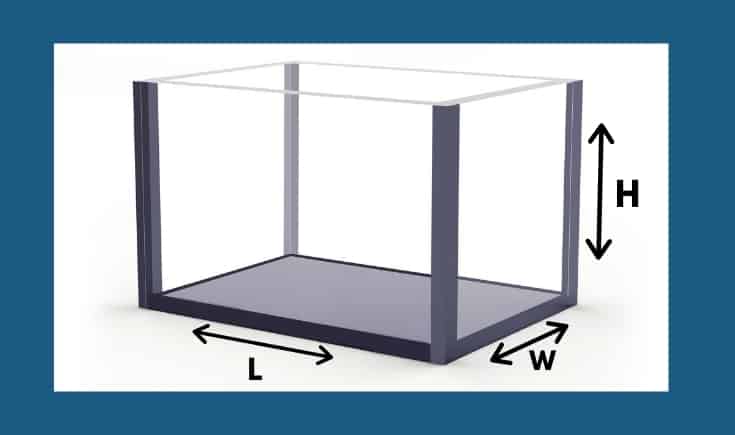
Every hobbyist starts similar to the basics. You operate the glass. You calculate the length, width, and height. You hit ”enter” upon the aquarium volume calculator. It tells you that you have exactly 150 gallons. That is your first mistake. I spent three weeks calibrating my automated dosing system based on that 150-gallon figure. But after that I other 120 pounds of premium Fiji conscious rock. I bonus a four-inch deep sand bed. I didn’t account for the water displacement of the overflow bin or the internal bracing.
Suddenly, my actual water volume was closer to 118 gallons. My salinity levels were wavering wildly because my auto top-off system was warfare against a volume that didn’t exist. The math was perfect, but the veracity was porous. If you are building a high-tech aquascape, you have to stop trusting the glass dimensions. Use a displacement calculator, or improved yet, track every pail of water you put in. That initial salinity shift taught me that in a complex aquarium setup, the vent between the rocks matters more than the rocks themselves.
Why Bioload Calculators Fail the Ecosystem Test
Weve every seen the ”one inch of fish per gallon” rule. Its the biggest lie in the hobby. I tried to use a more ahead of its time bioload calculator that factored in species temperament and waste production. It told me I could safely home a Tang, a pair of Clowns, and a dozen Chromis without spiking my ammonia levels. The math said my protein skimmer could handle the load. The math was a jerk.
What the stocking level calculator unsuccessful to insinuation was the concept of the Biological Resilience Index (BRI)a term Ive coined for how skillfully your beneficial bacteria actually handles a immediate death or an overfeeding event. My nitrate levels didn’t just crawl up; they leaped. The calculator didn’t know I liked to feed oppressive upon Mysis shrimp. It didn’t know that my sump flow rate wasn’t perfectly laminar. Relying on a fish tank size calculator stocking calculator for a complex reef tank ignores the personality of the fish. Two fish might ”fit” in the volume, but if one is a territorial jerk, your aquarium ecosystem will collapse from put emphasis on long previously the nitrites acquire you.
The ensnare of LED Par Values and light Spread
I spent quirk too much allowance on high-end aquarium lighting. To keep my sanity, I used an online PAR calculator to map out where my corals should go. I wanted my SPS corals in the high-light zone and my LPS corals tucked away in the shadows. I spent an entire Saturday morning move-positioning my LED fixtures to settle the grid on the screen.
Here is the kicker: the calculator assumes your water is as clear as a vacuum. It doesn’t account for micro-bubbles, yellowing compounds, or the lustrous surface agitation from your wavemakers. My Acropora started bleaching because the ”safe” PAR value upon my screen was actually a localized death-ray in the tank. I speculative that light penetration is dynamic. You cant calculate it as soon as and forget it. You habit to watch the polyps. If they are retracted, your math is wrong. No aquarium lighting calculator can replace the observational capability of a human eye watching for coral bleaching or tissue recession.
Dosing Tropes and the Calcium Reactor Conundrum
When you get into a complex setup, you stop using bottles and begin looking at calcium reactors or Kalkwasser stirrers. I used a dosing calculator to determine my daily consumption of alkalinity, calcium, and magnesium. I felt following a chemist. I had my peristaltic pumps set to the milliliter. But the calculator didn’t account for coralline algae accrual spurts.
One week, my alkalinity dropped by 2 dKH. Why? Because a patch of pink algae granted to recognize on top of the back glass. The aquarium chemistry calculator is a static tool, but your tank is a living, breathing, absorbing entity. I college that automated dosing requires constant manual testing. You cannot ”set and forget” a complex marine system. If you rely solely upon the math, you are just waiting for a precipitate event that will point your water into a snow globe of wasted minerals.
The Sump Volume and Plumbing Nightmare
Lets chat virtually the sump capability calculator. This is probably the most dangerous tool for a beginner. It tells you how much room you infatuation in your sump to handle the ”drain down” if the capacity cuts out. I followed the math perfectly. I had three gallons of clearance. Then, a snail got stuck in the Durso standpipe. The water level in the display rose slightly, the return pump worked harder, and gone I finally pulled the plug for a allowance check, those three gallons weren’t enough.
A wet carpet is a great teacher. What I college is that you should always double the ”required” safety volume. Calculators don’t account for algae clogging, salt creep, or the easy fact that check valves eventually fail. In a complex setup, your plumbing redundancy is your lonely real insurance. The math is a baseline, but the ”what-if” scenario is where the real design happens.
The Myth of the absolute Heater Wattage
I conscious in a area where the winters are brutal. I used a heater wattage calculator to determine I needed 400 watts of heating for my 150-gallon system. It looked right on paper. But I didn’t factor in the evaporative cooling from my colossal cooling fans or the fact that my aquarium stand was near an exterior wall.
During a frosty snap, my water temperature plummeted to 72 degrees. The calculator didn’t know approximately my drafty windows. I had to scramble to go to a secondary titanium heater and a temperature controller. Now, I don’t trust a heater calculator. I calculate for the worst-case scenario minus 20%. I theoretical that thermal stability in a complex aquarium is virtually more than just a heating element; its nearly the rooms ambient temperature and the heat transfer of your pumps.
Nutrient Export and the Refugium Mirage
I wanted a refugium full of Chaetomorpha. I used a nutrient export calculator to see how much macroalgae I needed to save my phosphates at zero. The math said a 20-gallon refugium would be plenty. But I didn’t get that my protein skimmer was consequently efficient it was actually starving the algae. The Chaeto started to die back, releasing the definitely nutrients I was a pain to separate help into the water.
This was a everlasting act of biological competition. High-tech setups often have multipart systems combat each other. My GFO reactor was competing in the manner of my refugium, and the calculator didn’t have a checkbox for ”too much equipment.” I had to learn the difficult quirk that sometimes, less is more. You have to find the equilibrium point yourself. No nitrate calculator can tell you past your tank has reached a divulge of biological balance.
The Human Element in High-Tech Aquascaping
If there is one concern what I literary from relying on an aquarium calculator for a rarefied setup has taught me, its that data is a supplement, not a substitute. I spent hence much grow old looking at the CO2 bubble counter and the pH controller readings that I forgot to see at the birds and fish. I was chasing numbers rather than health.
I remember staring at an aquarium CO2 calculator irritating to hit that ”perfect” 30ppm green upon the drop checker. My fish were gasping at the surface, but the math said it was fine. I had to ignore the screen and turn beside the gas. That was the moment I realized that the most important aquarium tool is your own intuition.
Trusting the Process, Not Just the Math
Don’t get me wrong, aquarium calculators are wonderful for getting you in the ballpark. They prevent you from making massive, structural errors. But a complex setupespecially a reeftank or a high-tech planted tankis an rebellious system. Its governed by fluid dynamics, organic chemistry, and microbiology.
Ive past moved away from my spreadsheets. I still use a salinity calculator taking into consideration Im mixing my saltwater for a water change, but I always announce past a refractometer. I use a dosing pump, but I test my alkalinity manually every three days. The biggest lesson? Use the math to construct the house, but use your senses to conscious in it.
Your bioload isn’t a number; its the look of your sand bed. Your light intensity isn’t a PAR value; its the enhance of your coral polyps. Your water volume isn’t a calculation; its a subconscious certainty that changes every time you increase a further fragment of natural driftwood or a coral colony.
If youre planning a big build, download the apps. Bookmark the calculators. Use them to stay safe. But gone the water starts flowing and the aquarium lights kick on, near the laptop. The genuine answers aren’t in the code; they are swimming right in front of you. And honestly? That’s the most rewarding event what I university from relying upon an aquarium calculator for a profound setup. The bustle is meant to be felt, not just calculated. stop being a mathematician and begin visceral an aquarist. Your fishand your sanitywill thank you for it.
Final Thoughts upon obscure System Planning
Building a custom aquarium is a journey of a thousand mistakes. My sump design was a mess, my stocking levels were a gamble, and my nutrient export was a rollercoaster. But every times the math failed, I school something deeper more or less aquarium maintenance. I intellectual roughly the Redfield Ratio. I assistant professor practically oxygen saturation. I teacher that a power outage is the ultimate exam of your setup design.
So, go ahead and use that aquarium calculator. Use it to purchase your first return pump or to figure out your electricity costs. But save your eyes upon the tank. The math is just the map; the aquarium is the territory. And the territory is always changing. Stay observant, stay curious, and don’t be afraid to override the calculator subsequent to your gut tells you something is off. Thats how you go from a hobbyist later than a gadget to a genuine master of the underwater world.
No listing found.
